
- Your cart is empty
- Continue Shopping
sensors
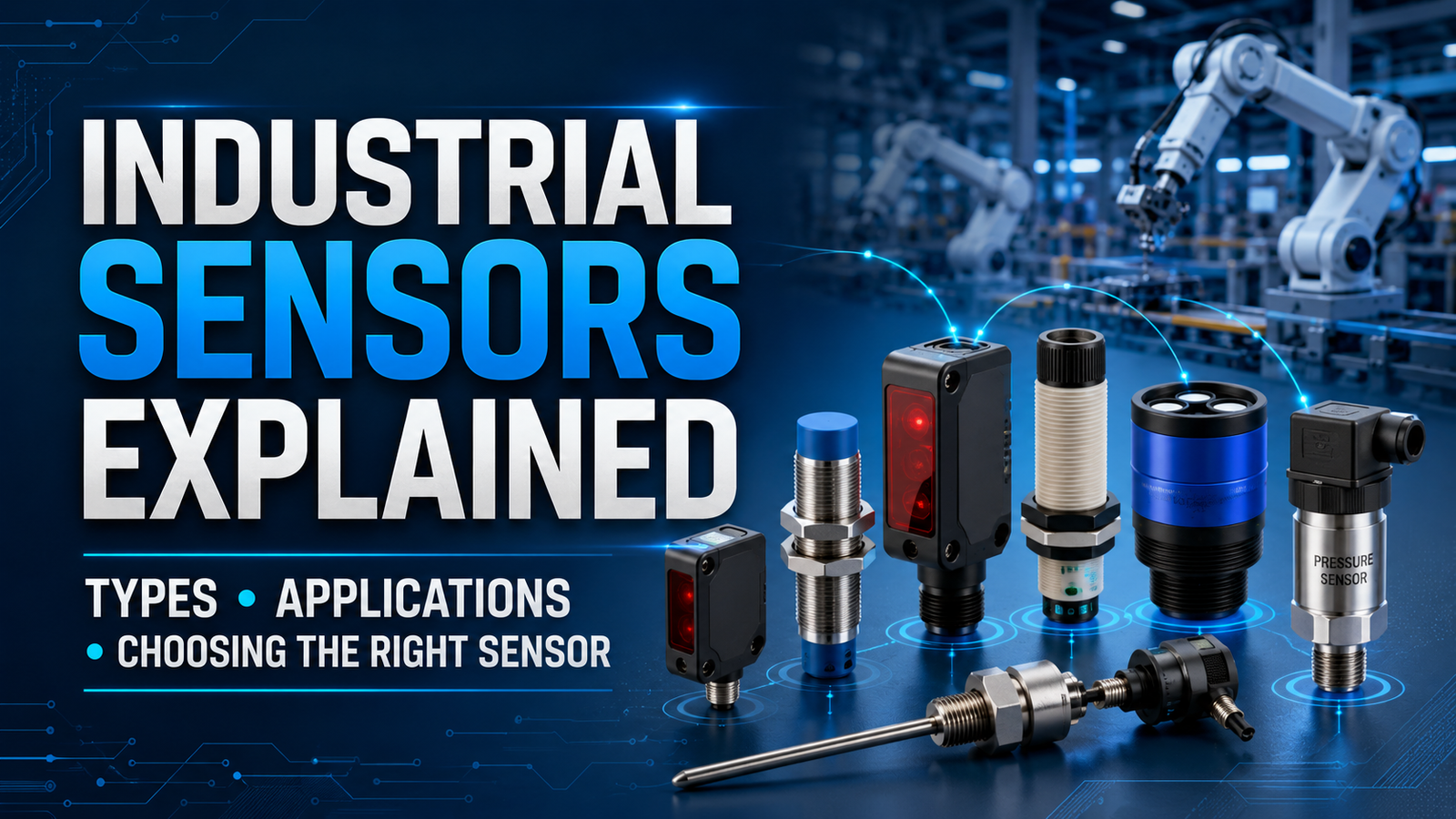
Industrial Sensors Explained: Types, Applications, and How to Choose the Right Sensor
-
By digiwebcore@gmail.com
- Posted on
- 0 comments
Industrial automation has transformed the manufacturing landscape by making production processes faster, more efficient, and highly reliable. At the heart of every automated system lies a network of industrial sensors that continuously monitor equipment, detect changes, and provide real-time feedback to control systems. Whether it’s detecting the presence of an object, measuring pressure in a hydraulic system, or monitoring machine temperature, sensors play a critical role in ensuring smooth operations.
Selecting the right sensor is equally important. The wrong choice can lead to inaccurate readings, production downtime, and increased maintenance costs. This guide explains the most common types of industrial sensors, their applications, and the key factors to consider when choosing one for your facility.
What Are Industrial Sensors?
Industrial sensors are electronic devices designed to detect physical changes in an environment and convert them into electrical signals. These signals are processed by PLCs (Programmable Logic Controllers), HMIs, SCADA systems, or other industrial controllers to automate processes and improve decision-making.
Industrial sensors are widely used in:
- Manufacturing plants
- Packaging industries
- Food and beverage processing
- Pharmaceutical production
- Automotive manufacturing
- Material handling systems
- Robotics and automation
- Warehouse automation
- Chemical processing
Types of Industrial Sensors
1. Photoelectric Sensors
Photoelectric sensors use a beam of light to detect the presence, absence, or distance of an object. They are among the most commonly used sensors in industrial automation due to their versatility and long sensing range.
Working Principle
A transmitter emits a beam of light, while a receiver detects the reflected or interrupted beam. When an object blocks or reflects the light, the sensor generates an output signal.
Applications
- Conveyor belt object detection
- Counting products
- Packaging machines
- Bottle filling systems
- Label verification
- Position detection
Advantages
- Long sensing distances
- Fast response times
- Detects almost any material
- High reliability
2. Proximity Sensors
Proximity sensors detect nearby objects without making physical contact. They are ideal for harsh industrial environments where mechanical switches may wear out.
Common Types
- Inductive Proximity Sensors
- Capacitive Proximity Sensors
- Magnetic Proximity Sensors
Applications
- Machine positioning
- Conveyor systems
- Robotics
- Metal detection
- Assembly automation
Advantages
- Contactless operation
- Low maintenance
- Long service life
- High switching frequency
3. Ultrasonic Sensors
Ultrasonic sensors use high-frequency sound waves to measure distance or detect objects. They perform exceptionally well in dusty, smoky, or transparent object detection applications.
Working Principle
The sensor emits ultrasonic waves and measures the time required for the echo to return after striking an object.
Applications
- Tank level measurement
- Distance measurement
- Liquid level sensing
- Pallet detection
- Object positioning
Advantages
- Detects transparent objects
- Works regardless of object color
- Performs well in dusty environments
- Accurate distance measurement
4. Inductive Sensors
Inductive sensors specifically detect metallic objects using electromagnetic fields. They are among the most durable sensors available for industrial automation.
Applications
- CNC machines
- Metal detection
- Position sensing
- Production lines
- Automotive assembly
Advantages
- Resistant to oil and dirt
- High durability
- Fast response
- Excellent repeatability
Best For
- Steel
- Iron
- Aluminum
- Copper
- Brass
5. Capacitive Sensors
Unlike inductive sensors, capacitive sensors can detect both metallic and non-metallic materials.
They measure changes in capacitance caused by nearby objects.
Detectable Materials
- Plastic
- Wood
- Glass
- Powder
- Liquid
- Paper
- Grain
- Metal
Applications
- Liquid level monitoring
- Packaging
- Food processing
- Pharmaceutical manufacturing
- Bulk material handling
Advantages
- Detects a wide range of materials
- Ideal for level sensing
- Adjustable sensitivity
6. Pressure Sensors
Pressure sensors measure gas or liquid pressure within industrial systems. They help maintain operational safety and process consistency.
Applications
- Hydraulic systems
- Pneumatic systems
- Compressors
- Water treatment plants
- Chemical processing
- Boilers
Benefits
- Prevents equipment damage
- Improves safety
- Enables predictive maintenance
- Provides accurate pressure monitoring
7. Temperature Sensors
Temperature sensors monitor heat levels in industrial equipment and processes. They help maintain product quality and protect machinery from overheating.
Common Types
- RTD Sensors
- Thermocouples
- Thermistors
Applications
- Furnaces
- Injection molding
- HVAC systems
- Food processing
- Pharmaceutical production
- Motors and generators
Advantages
- High accuracy
- Continuous monitoring
- Improves process control
- Prevents overheating
Comparison of Industrial Sensor Types
| Sensor Type | Detects | Best Applications |
|---|---|---|
| Photoelectric | Most objects | Object detection, counting, packaging |
| Proximity | Nearby objects | Position sensing, automation |
| Ultrasonic | Distance and level | Tank monitoring, transparent object detection |
| Inductive | Metal only | CNC, machining, automotive |
| Capacitive | Metal & non-metal | Liquid level, powder detection |
| Pressure | Fluid/Gas pressure | Hydraulic and pneumatic systems |
| Temperature | Heat | Process control, machine monitoring |
How to Choose the Right Industrial Sensor
Selecting the appropriate sensor depends on your application and operating environment. Consider the following factors before making a decision:
1. Type of Material
Different sensors detect different materials.
- Metal → Inductive Sensor
- Plastic, Glass, Liquid → Capacitive Sensor
- Any object → Photoelectric Sensor
- Distance Measurement → Ultrasonic Sensor
2. Sensing Distance
Determine the required detection range.
- Short-range detection
- Medium-range applications
- Long-distance sensing
Photoelectric sensors typically offer longer sensing distances than inductive sensors.
3. Environmental Conditions
Industrial environments vary significantly.
Choose sensors that can withstand:
- Dust
- Oil
- Moisture
- High temperatures
- Chemical exposure
- Vibration
Look for sensors with appropriate IP ratings (such as IP67 or IP69K) when operating in harsh conditions.
4. Accuracy Requirements
Applications such as pharmaceutical manufacturing, CNC machining, and semiconductor production require highly accurate sensors.
Choose sensors with:
- High repeatability
- Fast response time
- Stable performance
5. Mounting Space
Compact machinery often requires miniature sensors.
Check:
- Housing size
- Mounting style
- Connector type
- Cable length
6. Output Type
Ensure compatibility with your control system.
Common outputs include:
- PNP
- NPN
- Analog Output
- Digital Output
- IO-Link Communication
7. Industry Standards
Select sensors that comply with relevant industrial certifications and safety standards for your application, especially in food, pharmaceutical, and hazardous environments.
Benefits of Using the Right Industrial Sensor
Choosing the right sensor delivers measurable operational advantages:
- Improved production efficiency
- Higher product quality
- Reduced machine downtime
- Enhanced workplace safety
- Lower maintenance costs
- Increased automation reliability
- Better energy efficiency
- Real-time process monitoring
Applications Across Industries
Industrial sensors are essential in a wide range of sectors, including:
- Automotive Manufacturing: Robot positioning, assembly verification, and quality inspection.
- Food & Beverage: Packaging, fill-level monitoring, and temperature control.
- Pharmaceuticals: Sterile process monitoring, environmental control, and precision dosing.
- Material Handling & Warehousing: Conveyor automation, object detection, and sorting systems.
- Oil & Gas: Pressure monitoring, leak detection, and process safety.
- Packaging Industry: Product counting, label detection, and carton positioning.
Conclusion
Industrial sensors are the backbone of modern automation, enabling machines to monitor conditions, make real-time decisions, and maintain consistent performance. From photoelectric, proximity, ultrasonic, inductive, and capacitive sensors to pressure and temperature sensors, each type is designed to solve specific industrial challenges.
When selecting a sensor, evaluate factors such as the target material, sensing distance, environmental conditions, accuracy, mounting requirements, and compatibility with your automation system. Partnering with an experienced factory automation solution provider can help you choose the right sensing technology, integrate it seamlessly into your processes, and maximize operational efficiency.
By investing in the right industrial sensors, manufacturers can improve productivity, reduce downtime, enhance safety, and build smarter, more reliable automated systems for the future.
